
Sales organizations are racing to embrace artificial intelligence (AI) to sharpen customer engagement and boost performance, but many are discovering that enthusiasm alone doesn’t guarantee results. A growing number of companies are struggling to turn AI investments into meaningful outcomes for their go-to-market (GTM) strategies.
Highspot's Go-To-Market Performance Gap Report, released on Sept. 9, found that adoption often outpaces readiness. Highspot is a sales enablement platform provider specializing in AI-driven go-to-market and revenue optimization tools. The most affected companies are so-called “AI Leapers,” or organizations that lack the systems to turn insights into action.
Many sales and revenue teams have invested heavily in AI tools but remain stuck in what the report describes as “AI limbo,” lacking the infrastructure and workflow integration to make the technology work effectively.
Highspot’s survey of 463 global sales, marketing, and enablement leaders revealed that AI delivers consistent success only when it’s embedded in the GTM motion — informing coaching, connecting workflows, guiding execution, and providing managers with visibility to help sellers improve, not replace them.
These findings echo research from McKinsey and S&P Global, which shows that while generative AI adoption has surged, failure rates have risen alongside it. Highspot’s study reinforces that AI’s value comes not from adoption itself but from embedding it into frontline decision-making and connecting it through a cohesive GTM system.
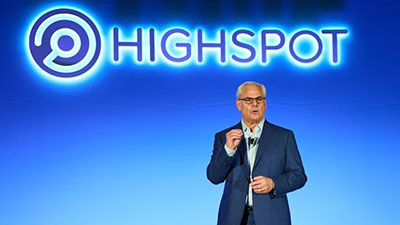
“Our new research reveals how organizations are stuck between strategy and execution when it comes to AI and sales enablement,” said Robert Wahbe, CEO of Highspot.
GTM Strategies Strain CRM and E-Commerce Systems
Go-to-market (GTM) strategies form the backbone of how organizations launch, market, sell, and deliver their products or services. When integrated with CRM systems and e-commerce platforms, they enable the seamless data flow, personalized customer experiences, and coordinated sales execution needed to convert insights into revenue.
Yet most leaders say their GTM operations are under strain. According to Highspot, nearly all respondents (96%) reported pressure from shifting priorities and stalled deals, while 80% cited burnout among their teams. Only 28% said AI is currently improving sales performance.
The report also found that fewer than one in four companies are investing in enablement or alignment systems — the very infrastructure that allows AI to support execution instead of adding complexity.
"The truth is AI only works when it’s aligned with people, process, and performance. Otherwise, you’re flying blind and burning out your teams in the process,” Wahbe told CRM Buyer.
The so-called AI Leapers appear across sales, marketing, and CRM-driven organizations. In each case, they face the same challenge: translating AI investments into measurable business outcomes.
"The barrier isn’t adoption. It's execution. Almost every company is investing in AI, but many don’t have the alignment or structural foundation to make it actionable, and it’s compromising their operations," he offered.
Highspot’s research found that 98% of leaders say their strategy is in motion, yet only 10% report strong execution, Wahbe added.
"That’s the gap where AI Leapers are seeing AI fall flat," he said.
Embrace Human-Centric GTM Strategies
Highspot’s findings highlight a growing priority for sales leaders: reducing friction and improving employee well-being, not just chasing revenue metrics. Wahbe sees irony in many organizations’ attempts to replace sellers with automation when the most effective AI use cases actually elevate them.
"Human-centric GTM strategies start with that mindset. Use AI to make people better at their jobs. That means enhanced coaching and taking the burden of disconnected tools off their plates," he explained.
That perspective signals a strategic shift in how AI can improve marketing and customer experience outcomes. Wahbe views AI as a dividing line between efficiency and engagement.
"At the top of the funnel, things are more transactional, so AI can automate that repetitive work and free up time. But deeper in the sales process, where solutions get more complex and conversations more nuanced, no AI is going to replace a skilled seller," he insisted.
That’s where people shine — and where AI should lift them, not hinder them, he added. "When AI is aligned to business needs from the start, it removes friction instead of adding it, so sellers spend less time wrestling with disconnected systems and more time with customers."
Closing the Execution Gap With AI
Highspot’s AI-driven enablement platform is designed to bridge the disconnect that often limits AI’s impact in sales execution. According to Wahbe, AI alone can’t close the go-to-market performance gap — it needs people, process, and alignment to transform data into meaningful action.
Most AI tools offer speed, but without insight, that speed becomes noise, he argued. Highspot’s approach differs by connecting insights directly to execution, so reps spend less time revisiting what they already know and more time mastering what drives results.
"When paired with Skill Coaching, adaptive learning turns everyday sales interactions into measurable growth – no disconnected tools, no extra admin, just progress where it counts," he explained.
The platform also supports secure integration with other AI systems through the model context protocol (MCP), allowing Highspot’s AI to collaborate with internal and external agents.
"The result isn’t just assistance, it’s AI that understands your GTM motion and drives precise action that closes the execution gap," he added.
Quick Fixes Costly, Unworkable
Highspot’s Go-To-Market Performance Gap Report found that fewer than one in four companies are investing in enablement or alignment systems — the essential groundwork for sustainable AI success. The long-term risk, Wahbe warned, is that organizations chasing quick AI wins are setting themselves up for deeper structural problems.
"Quick fixes come at a cost. If you keep layering AI onto a shaky foundation, you end up with burned-out sellers, declining win rates, and wasted investments," offered Wahbe.
The company’s research shows a troubling imbalance: while most leaders plan to expand AI spending, few are addressing the core issues that prevent those investments from working. Without tackling process and people challenges first, companies risk compounding the damage to their operations and profitability.
"The leading companies are building their foundation now so their teams can execute with clarity down the line," he noted.
Avoid This Typical Mistake
According to Wahbe, one of the most common pitfalls in AI adoption is assuming that implementation automatically leads to impact. Many organizations launch pilots or bolt AI tools onto their existing tech stacks, expecting immediate transformation.
"What they get instead are siloed insights that no one knows how to act on. AI on its own doesn’t move the needle. Instead of launching disconnected pilots, leading companies first ask what insight teams need to execute the right actions, then apply AI to unlock those insights," he observed.
True success, Wahbe emphasized, comes from role-based guidance, adaptive coaching, and embedded workflows that tie technology directly to human performance. The differentiator isn’t how many AI tools a company deploys — it’s whether those tools are actually changing behavior and driving outcomes, he concluded.






















 Loading ...