
As AI gains momentum across the enterprise in 2026, many companies are running into an unexpected obstacle: trust — and a workforce that isn’t keeping up.
Lance Younger, executive vice president, EMEA general manager, and global alliances at Oro Labs, describes this gap as the “AI paradox.” The technology is enterprise-ready, but people are not yet convinced.
The result is a growing divide between teams that redesign around AI and those that simply layer it on. Across enterprise AI rollouts, failures rarely come from the models themselves. Instead, they stem from unresolved questions about who owns decisions, how authority shifts once AI is introduced, and what employees are being asked to trust.
To better understand how companies are addressing these challenges, Oro collaborated with the Hackett Group on a study of procurement orchestration. The 2026 Procurement Orchestration Study revealed two key findings:
- Large-scale deployments of intake and orchestration have expanded eightfold in just two years.
- Orchestration is primarily applied to intake management, sourcing, contracting, and supplier onboarding.
AI’s biggest impact in procurement is addressing complex operational and compliance challenges, particularly in helping companies meet regulatory requirements at scale.
Procurement AI Drives Measurable Gains

The Procurement Orchestration Study examined the value of orchestration — coordinating procurement workflows across systems, teams, and suppliers into a single process.
It found no signs that AI adoption was slowing. Instead, 66% of organizations plan to invest in or upgrade these solutions within the next three years.
Despite AI’s relatively early use in ERP processes, participants reported a median 30% improvement in efficiency and automation. Source-to-contract cycle times are also 20 days faster than in organizations without formal orchestration.
The study also found strong results among adopters, with 93% reporting a positive user experience, compared with 49% among non-adopters.
Other reported benefits include enhanced data visibility (75%), pricing agility (66%), and improved supplier collaboration (59%). Respondents also cited a financial impact, including a 25% reduction in orchestration-related costs.
Orchestration Expands in Enterprise AI
AI adoption is accelerating, but procurement remains in an early stage of that shift. That reality is shaping Oro’s development strategy. The company began as an orchestration platform built around AI-first workflows and now works with large global enterprises on procurement transformations.
"The experience is better. Businesses come to our platform, either directly or via Copilot or Teams, and then drop into existing solutions. We're augmenting what people have already invested in, and starting to use agents where it makes sense," Younger said.
"A big part of the platform is humanizing the procurement experience. It's about improving how both business users and suppliers interact with the process," he added.
Balancing AI Gains With Workforce Concerns
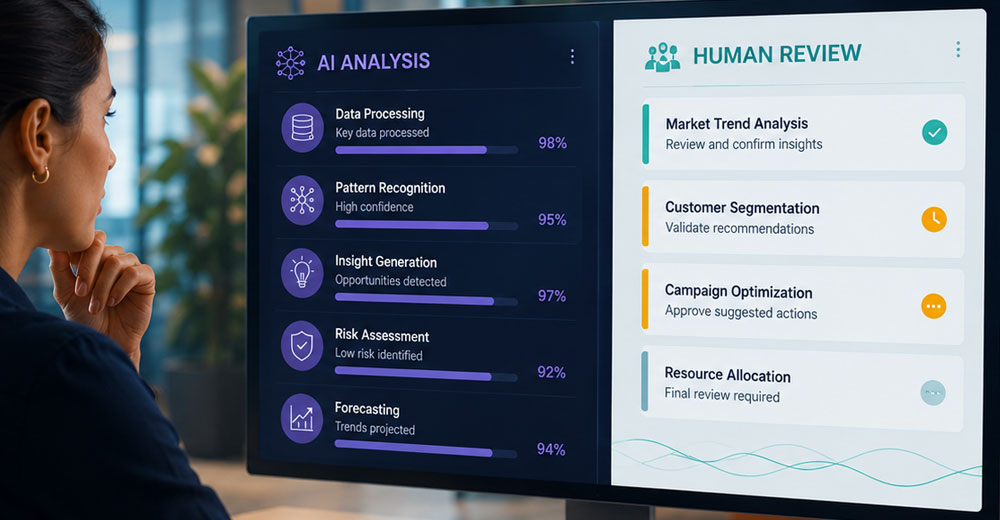
Anxiety about AI replacing jobs remains widespread. However, the platform is not designed to replace humans with AI. Instead, it is intended to help humans and AI work together by augmenting existing roles and systems.
"That fear is there. The productivity gains we're seeing are primarily in transactional areas. Organizations are replacing work previously done by people with the platform, but still keeping a human in the loop," Younger said.
He acknowledged that as automation expands across data-heavy workflows, some level of workforce displacement is likely unavoidable.
"It's a bit too early for many organizations to step away from fear of human job loss. What's accelerating is the notion that it's no longer a replacement for SAS expenditure. It's more about replacing or augmenting services and human expenditure with software," he said.
For Oro Labs, that includes working with business process outsourcing (BPO) providers to support those efforts.
Common Mistakes in AI Rollouts
Organizations are adopting AI at different paces, depending on their maturity and capabilities.
Younger compared the process to the release of ChatGPT, when many enterprises refused to use it. Gradually, that response changed to: "Here is how you can use it."
"We're seeing organizations experiment with agents, but many get stuck. They build an agent in Copilot to handle procurement, but it isn’t connected to the right systems, so it lacks context. It fails more and hallucinates more," he explained.
Organizations often fail to define the problem upfront or fully understand current AI capabilities. They also lack a clear view of how those capabilities will evolve.
"We often tell clients the platform is designed to support what they need today and what they’ll want to do in three years, based on the architecture we’ve built," he said.
AI Adoption Still Moving Cautiously
The outlook for AI in procurement remains positive. However, success will depend on changes in management priorities.
"This new wave of AI technology means you need to fundamentally change how organizations operate. One mistake organizations make is overlooking change management," he said.
In procurement, where regulatory requirements are complex, AI can deliver significant gains, he concluded.






















 Loading ...