
Many organizations delay commercial AI initiatives because their CRM data is incomplete, inconsistent, or poorly maintained. According to consultants at Blue Ridge Partners, waiting for perfect data often means waiting indefinitely.
The firm’s research suggests that commercial teams can often generate value from AI without first fixing every data quality issue. The key is to focus on narrowly defined use cases — such as cross-selling, upselling, and sales enablement — where imperfect data can still produce actionable insights.
Erica Summers, managing partner at Blue Ridge, said that imperfect data does not have to stall AI success in commercial applications. What matters is narrowing the scope, engineering actionable signals, and embedding AI into real workflows.
“Success correlates with aligning people, processes, and technology — not tool-chasing,” she told CRM Buyer.
Why Commercial AI Projects Stall
Last fall, Blue Ridge studied AI adoption among 250 commercial organizations and found that only 13% were achieving measurable success with AI initiatives. According to Summers, finance and operations teams tend to outperform go-to-market groups because they start with defined outcomes, disciplined processes, and clear data ownership.
The research also found that many executives believe they must fix their data before applying AI.
“They’re not wrong. It’s thinking about where you can put AI that is not so data dependent initially,” Summers explained.
The study found that many companies rushed to buy AI tools before identifying where the technology could have the greatest impact. Summers noted that this is a common pattern when new technologies emerge. Businesses often begin investing in tools and initiatives before establishing the processes needed to support them.
That helps explain why operational functions such as finance, technology, and professional services often report higher success rates with AI implementations. Those teams typically have more mature processes in place before introducing new tools.
Building AI Around Process, Not Tools
Operational functions such as finance see higher ROI from AI due to more mature processes and clearer data ownership. Imperfect or dirty data is not a blocker if you narrow the scope, engineer signals, and iterate with prescriptive workflows.
Another takeaway from the research is that companies often get more value from integrating the tools they already have than from building new AI systems from scratch. Breaking down barriers between sales, marketing, and customer success teams can also help AI identify patterns across customer interactions and support more coordinated decision-making.
AI adoption is as much a management challenge as a technical one. Organizations are more likely to succeed when managers incorporate AI-generated insights into daily workflows and are held accountable for adoption goals.
According to Summers, companies should start with narrowly defined use cases that have measurable business outcomes rather than waiting for perfect data. “Once we explain those, clients are raising their hands to try things out,” she said.
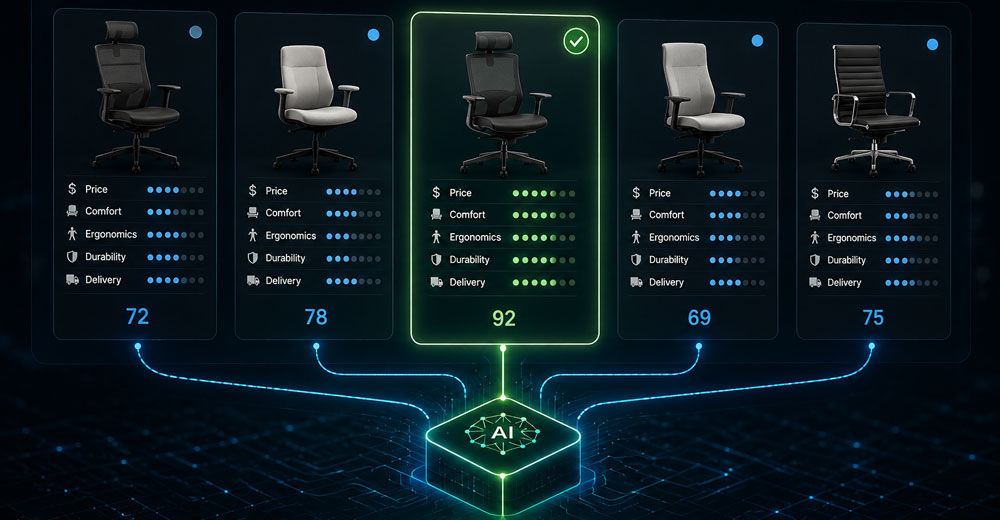
One example involved stack-ranking accounts, developing prescriptive plans, and using conversation intelligence to surface missed buying signals. The result was a more focused sales effort, clearer feedback loops, and better-informed technology decisions.
Applying AI to Commercial Challenges
Summers clarified that Blue Ridge is a consulting firm, not a software vendor. The company first evaluates the tools and technologies clients already use and, when necessary, recommends external vendors that specialize in specific commercial use cases.
“When our clients have a need that we’ve identified, we know who the go-to vendors are,” she said.
For example, Summers cited customer churn as an area where AI could help identify risks earlier. Each department often relies on different systems, metrics, and data sources, making it difficult to create a unified view of customer risk.
“Platforms are emerging that pull that data together and use AI to read signals across it. We’re seeing some success there, but it’s not game-changing the way some of the other spaces are, specifically because of the silos,” she said.
The broader lesson, Summers concluded, is that successful AI initiatives depend less on perfect data or the latest tools than on aligning people, processes, and technology around specific business goals.





















 Loading ...