
Agentic AI is shifting CRM from simple automation toward collaborative workflows, where AI handles routine tasks and humans apply judgment, context, and relationship-building. Rather than replacing frontline roles, this model enhances them.
Research from Goldman Sachs aligns with this shift. The firm estimates that while AI adoption may temporarily displace 6% to 7% of U.S. jobs, the long-term effect is more likely to be role transformation — expanding opportunities where human expertise remains essential.
The highest displacement risk — affecting roles like computer programmers, accountants, legal assistants, and customer service representatives — is driving a new wave of workflow innovation. Specifically, agentic AI systems are poised to re-architect CRM and customer experience (CX) operations by balancing automation with structured human oversight.
One company, MelodyArc, is championing this shift by pushing beyond single-task automation. Its leaders see the real winners in the AI agent race as the businesses that put humans in control of the workflow. Its solution focuses on building and deploying agentic AI systems that work across real-world tools, data, and teams, enabling organizations to direct workflows for greater accuracy and competitive advantage.
Today’s single-task agents scratch the surface, leaving workflows broken, slow, and expensive, according to MelodyArc. Its CRM features give teams the tools to own, shape, and speed up their workflows through agentic AI systems, without being data scientists or engineers, to easily implement and refine processes, according to James McHenry, the company's co-founder and CEO.
"It enables them to precisely apply rules, AI or human judgment, to every step where it’s needed," he told CRM Buyer.
‘Human-in-the-Loop’ Advantage
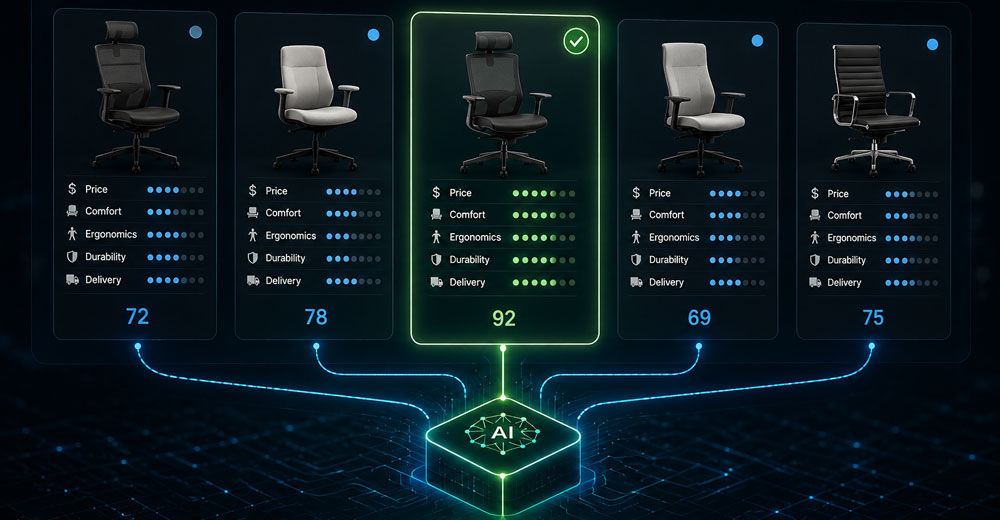
Traditional CRM automation often stops at simple tasks, leading to gaps and handoffs that slow teams down. MelodyArc addresses this by introducing a tiered, non-binary approach to automation that ensures human control is central to the process.
"Instead of facing a choice between 0% automation and 100% automation with poor ROI, the human-in-the-loop approach allows us to automate 80% to 90% of complex processes, leaving the most critical points to a person, especially those that require a specific skill set," McHenry said.
MelodyArc's platform uses three decision-making levels:
Rules First: Applies established rules for simple, cut-and-dry decisions, entirely avoiding AI error potential.
AI Second: Kicks in for decisions requiring pattern recognition and understanding, but only when made with high confidence.
Human Decision-Making: Takes over for ambiguous, complex, or high-risk decisions that lack a clear standard operating procedure or require critical judgment.
McHenry added that while large enterprises are "drowning in data," AI excels at sifting through this landscape to execute routine tasks at scale. However, it lacks the judgment for high-stakes decisions.
Reducing Risk Where It Matters Most
This human-in-the-loop design is crucial for high-risk frontline processes — such as processing customer returns — where a small error rate can have a multimillion-dollar impact on the P&L. Specific frontline processes carry high risk, often impacting profit and loss or security, noted MelodyArc Co-founder and COO Ashley Moser.
As Moser explains, "In these high-risk scenarios, where even a 1% error rate is unacceptable, full automation is not desired. A human-in-the-loop is critical to maintaining a very low error rate by acting as the final checkpoint or decision-maker, ensuring security and mitigating financial exposure."
MelodyArc's approach delivers lower-risk returns on investment through its competitive-edge platform. The specific benefit depends on the process, but in customer support, users commonly see efficiency gains between 30% and 60%, Moser noted.
Beyond speed, it reduces risk by mechanically and systematically ensuring compliance. For instance, implementing specific security or regulatory measures ensures they are embedded directly into the workflow.
To drive revenue growth, MelodyArc enables what it calls “mechanizing customer delights,” which the company defines as systematically ensuring positive moments or upsell opportunities occur when the context is right. Embedding a required upsell or positive interaction into the workflow ensures users consistently offer it whenever a positive customer cohort or interaction occurs, which drives immediate revenue, according to Moser.
Integrated Design: Augmenting, Not Competing
MelodyArc is not a competing CRM platform. Instead, the software integrates seamlessly with an organization's existing CRM systems, such as Salesforce or HubSpot.
The founders, who credit their design philosophy to negative usability experiences in prior roles at AWS and Walmart, focused on starting where humans do. MelodyArc abstracts the complexity of navigating and switching between multiple data sources and systems.
According to McHenry, the goal is to "support any frontline worker whose job relies on expert knowledge in service to a user." The technology makes the workflow efficient and pushes clean data back into existing systems, maintaining a single source of truth.
The platform's design enables frontline managers and process owners to handle daily operations, democratizing the power of agentic AI. As Moser concludes, "This accessibility unlocks a huge opportunity, enabling the platform to easily spread across the entire enterprise and benefit a broader range of people.”
Ultimately, the future of work is not about AI replacing humans, but about empowering them. By seamlessly integrating agentic AI with crucial human oversight — a "human-in-the-loop" model — companies like MelodyArc are not just automating tasks; they are creating a new competitive advantage.
This approach improves efficiency, reduces financial exposure, and gives frontline experts direct control over how work gets done. The real disruption is not the rise of the agent. It is the rise of the augmented, empowered human worker.






















 Loading ...