Following its rebranding from SugarCRM in early April, SugarAI is continuing its transformation from a traditional CRM vendor to a provider of AI-driven revenue intelligence.
SugarCRM helped popularize open-source CRM as a flexible alternative to traditional enterprise platforms before eventually discontinuing its open-source community edition. Today, SugarAI is betting that AI can help CRM evolve from a passive record-keeping system into a platform that proactively guides sales teams.
According to SugarAI, its new identity reflects a strategy centered on precision selling. AI can transform CRM from a traditional system of record into a platform that proactively interprets signals across the business, helping sellers focus on the highest-value accounts and opportunities. The approach is designed to help revenue teams identify where attention is needed and spot emerging risks.
Traditionally, CRM platforms have focused on capturing data, generating reports, and providing backward-looking visibility. SugarAI argues that today's sales environment requires software that can proactively surface insights and recommend next steps.
David Roberts, CEO of SugarAI, noted that CRM must do more than store information to help teams take the right action at the right time with proactive, guided execution. Customers expect Sugar to deliver on the 30-year-old promise of CRM: helping sellers and account managers get more value from the software than the effort they put into it.
“Sugar will deliver on this promise with its focus on seller experience and integration to enterprise resource planning (ERP) data, all powered by AI," he said.
ERP Data Is Central to SugarAI's Strategy
Bob Hackney, chief product and technology officer at SugarAI, noted that its platform handles data ingestion from third-party ERP systems, as well as homegrown AI built on SugarPredict and partnerships with major large language model (LLM) providers. SugarAI deliberately built ERP ingestion as its own integration layer rather than bolting it onto the Sugar Sell codebase.
"That distinction matters less than people assume. That data flows into our Unified Data Platform, a curated lake house that fuses ERP and CRM so AI can reason over both," Hackney told CRM Buyer.
He explained that on the AI side, the platform uses a combination of proprietary and partner-powered capabilities. SugarPredict is the company's own IP, trained on Sugar's industrial customer data. At the same time, the generative and agentic reasoning runs on Anthropic's Claude models because those developers moved faster in this area.
"We’re not training a foundation model. The moat is not the LLM itself. It is curated, contextual business data that enables AI to deliver relevant, accurate, and actionable insights to sellers," he added.
AI Changes the Seller Workflow
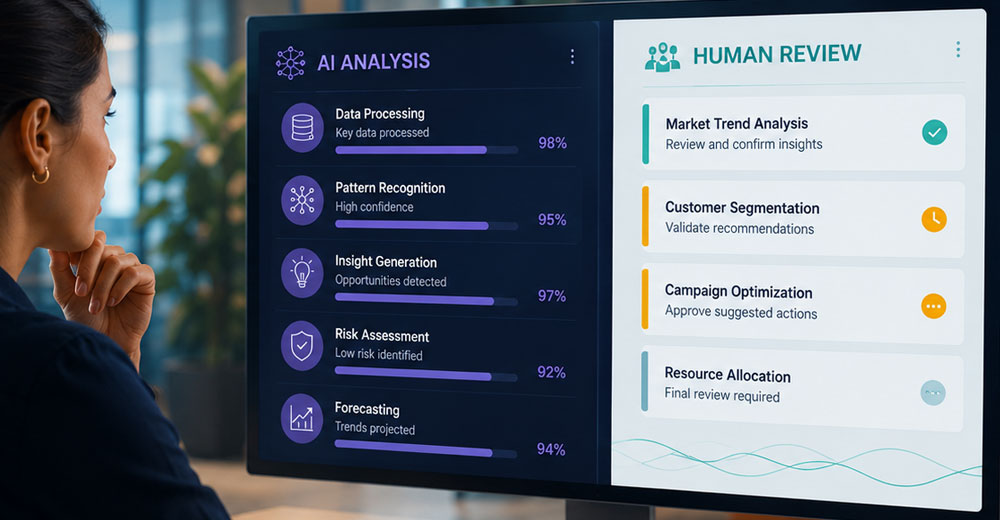
Hackney described how a seller experiences a proactive signal versus the traditional dashboard routine, illustrating what guided execution looks like on a seller's screen.
"Traditional CRM stops at capture and hands the rep a dashboard to read, interpret, and determine next steps," he said, describing the key distinction.
A proactive signal flips that model. The system continuously monitors for meaningful changes in deal momentum, customer engagement, at-risk support tickets, renewals or reorders coming due, and relevant ERP data. Instead of waiting for the seller to search through reports, Sugar surfaces what needs attention.
"For example, a seller opens Sugar and sees a card that says, 'Acme stalled 12 days. Support ticket open. Reorder due.' That is the signal," he said. The system then guides the seller through the recommended next steps. With one click, the seller opens the brief, the AI drafts outreach based on the customer's actual quote and product data, and the rep edits and sends. Sugar performs the underlying analysis, while the seller reviews and approves the recommended action.
More Than a New Name
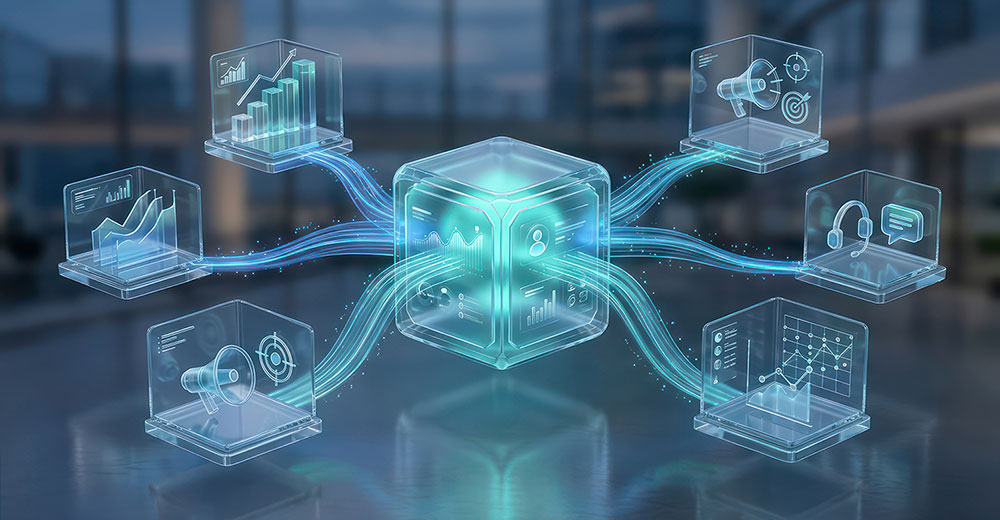
According to Hackney, the company's rebranding is not just a coat of paint on its CRM platform. It required rebuilding the platform around a unified data architecture. That foundation supports the company's AI capabilities, including agentic functionality, while the company has also introduced a new Current + AI tier.
"We’ve also rebuilt how we operate internally as an AI-first, spec-driven organization," he said.
Hackney noted that all of the remodeling is built on the Sugar foundation: the same customers, the same data, and the same deployments. It's an evolution of the existing product into an AI-native platform, not a product the company threw away and restarted.
"The name, SugarAI, signals the direction, but the substance is the re-architecture underneath it," he emphasized.
He added that many SaaS companies and B2C retailers treat CRM as the primary customer system while relying far less on ERP data, which can cause them to miss operational signals that affect revenue.
Serving Industrial Distribution and Manufacturing
As part of its rebranding announcement, SugarAI said its platform is particularly well-suited to industrial distribution and manufacturing, where ERP data plays a much larger role than in many SaaS and retail environments.
Hackney said the company's assessment reflects the reality that distribution and manufacturing companies rely on both ERP and CRM systems. Unlike many industries, critical business data is spread across massive product catalogs, complex pricing structures, reorder patterns, and long, multi-touch buying cycles. Key signals — including reorder timing, catalog gaps, product history, and margin data — primarily reside in ERP systems.
"Sugar is the CRM that natively understands them," he said. "Sugar is built differently."
Hackney explained that the company built ERP integration as a first-class capability, with connections to roughly 20 ERP systems and dedicated products such as Sugar for Epicor Kinetic, Prophet 21, Sage and Syspro. The data platform fuses ERP and CRM data so AI can understand the full customer and account context.
How SugarAI Differentiates Its AI Strategy
Every major CRM vendor is advancing an AI strategy. SugarAI's pragmatic approach is not based on AI for the sake of AI, according to Hackney. For SugarAI, pragmatic means every capability is tied to a specific business purpose and a measurable outcome.
This approach shortens ramp time, makes sellers more productive, reduces the sales-ops burden, or helps teams act faster on revenue signals. It also means the AI is grounded in the customer’s curated business data, not in generic AI responses. Governance, security, and guardrails are built in from the start, he offered.
SugarAI is clear with its customers about the outcomes the platform targets and the timeline for getting there, and it delivers against the roadmap, he said.
Whether customers embrace that approach will depend on whether AI-guided selling delivers measurable gains beyond the predictive and generative AI capabilities already being introduced across the broader CRM market.















 Loading ...