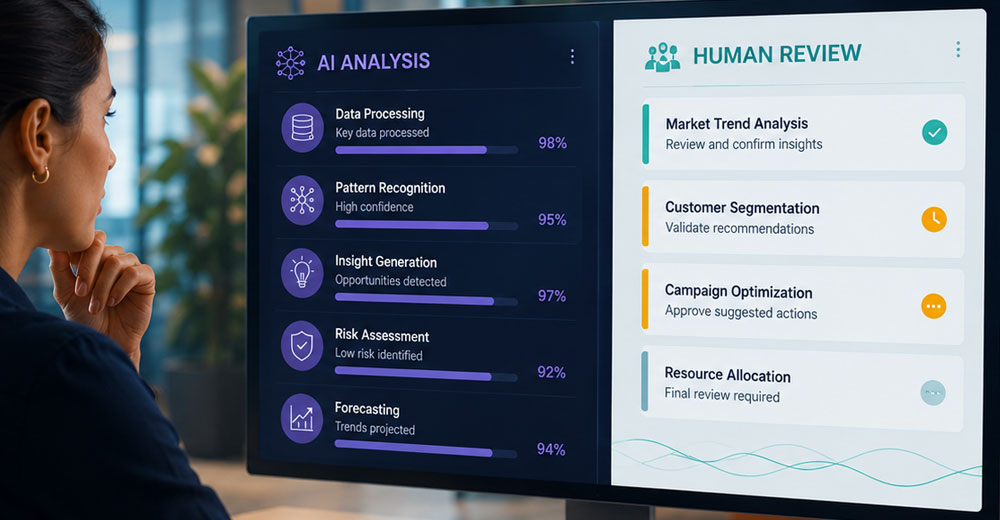

Agentic AI's potential for improving customer satisfaction and streamlining workflows is bolstering its appeal in customer service circles and fueling what could be a US$47.1 billion market by 2030, according to Markets and Markets. Moreover, Gartner predicts that 80% of all common customer service issues will be solved by AI agents without human intervention by 2029.
"These agentic experiences enable self-service and right-in-customer’s-time experiences that we likely could not deliver at human scale," said Liz Miller, vice president and a principal analyst at Constellation Research, a technology research and advisory firm in Cupertino, Calif.
"Customers can gain access to information, take actions or have actions taken proactively that bring value in tangible ways," she told CRM Buyer.
Miller explained that customers most often define value as something that saves them money or time or brings something new into their lives. "Agentic workflows and automation certainly help with time," she noted. "Agents can cut to the meat of issues, recommend the exact right products, and even offer recommendations for other products that are in line with the customer's wants."
Offloading some customer service chores to AI agents also has appeal to CX providers. "The more customer support calls you have to field, the more people you have to have in contact centers to answer those calls. That adds to the total cost of customer service," explained Stephanie Liu, a senior analyst with Forrester, a market research company headquartered in Cambridge, Mass.
"There's a lot of buzz around how to put a lot of that work on AI agents so fewer humans are involved," she told CRM Buyer.
AI Agents Must Get Smarter to Deliver Value
As rosy as the predictions for the size of the agentic AI are, they are all assuming these agents will get a lot smarter than they are now, asserted Craig Crisler, CEO of SupportNinja, a provider of customized outsourcing solutions in Dallas.
“The agentic agents you're seeing now are like your old school Interactive Voice Response [IVR] systems,” he told CRM Buyer. “They ask you what you want to do and then guide you through this phone tree. You have to answer the questions exactly right for it to work.”
“To get it to a level where it's able to act on its own and do things on your behalf as a true agentic agent would is going to be a pretty big leap,” he said.
“What we see happening with all of these deployments is everyone is creating the backdoor to talk to a human,” he continued. “So everyone's doing exactly what we've seen happen when you get stuck in a phone tree or an IVR. They're all creating ways to say the right thing to the agent, and it will get you to a real person.”
Dev Nag, CEO and founder of QueryPal, a customer support chatbot in San Francisco, countered that the projected growth of the agentic AI market reflects how the systems contribute to customer satisfaction through their ability to understand context, solve complex problems, and execute multi-step processes without human intervention.
“When customers receive instant, accurate responses that actually solve their problems rather than just acknowledging them, satisfaction naturally increases,” he told CRM Buyer. “Multi-modal agentic support AI can even interpret incoming screenshots and attachments to quickly find relevant documents and past tickets to craft an ideal response.”
However, he acknowledged, “Poorly configured agentic AI could create dissatisfaction if implementations fail to capture the nuanced problem-solving approaches of experienced customer service agents and insufficient training data, resulting in solutions that might technically address the issue but miss important emotional elements or fail to recognize when a situation requires human empathy and escalation.”
AI Agents Surpass Chatbots in Customer Service
Edward Tian, CEO of GPTZero, a maker of an AI detection platform in Arlington, Va., emphasized the difference between the typical chatbot delivering customer service at a website and an AI agent. “AI agents are significantly more sophisticated and have way more capabilities, plus they can adjust to each customer,” he told CRM Buyer. “So, they will be more helpful than what a lot of companies offer now.”
“Additionally,” Tian continued, “tons of customers, especially among the younger generations, prefer getting this kind of assistance compared to having to talk with a real person over the phone.”
He, too, admitted that AI agents have limitations. “Even though AI agents are very advanced, that still doesn’t mean they will be able to tackle 100% of inquiries with ease,” he explained.
“There may be things they can’t do, and that can cause customers frustration if they’ve wasted their time trying to use these tools. It is going to be very important for companies to constantly monitor their AI agents to make sure they make improvements where the technology is proving to fall short.”
Agentic AI can also be valuable to sales departments.
“For years, teams have faced a false choice: maximize outreach through generalized, one-size-fits-all messaging or sink significant time and resources into crafting deeply personalized messages for only a small pool of customers and prospects,” said Jonathan Lister, COO of Vidyard, a video hosting, messaging and analytics company, in Kitchener, Ontario, Canada. “Neither approach is particularly successful for hitting business targets, and both create roadblocks for sellers.”
“With agentic tools at their fingertips, go-to-market teams can let the technology do the heavy lifting of automating personalized communications at scale,” he told CRM Buyer. “In fact, we are already seeing this trend take shape with the rise of AI sales development representatives and video sales agents.”
“These agentic tools can independently take action on behalf of reps, automatically delivering meaningful interactions to customers and prospects throughout the sales cycle to increase engagement and revenue,” he continued.
“For example, an AI agent might be deployed to automatically offer a demo to prospects who have just downloaded a white paper. Or they might be used to confirm booked meetings to reduce the rate of no-shows. All of these interactions help sellers keep deals moving forward without any additional lift,” he detailed.
“By leveraging AI to handle routine touchpoints, sellers can refocus their time and attention on high-value conversations with decision-makers without sacrificing scale,” he added. “Go-to-market teams that embrace this agentic future will be well-positioned to build stronger relationships, increase customer satisfaction, and drive brand loyalty in 2025 and beyond.”
AI Agents Raise Expectations for Personalization
For merchants considering integrating AI agents into their operations, Steve Zisk, senior product marketing manager for Redpoint Global, a global customer data platform and engagement strategy provider, advised that they fully recognize that when it comes to customer interactions, agentic AI is still highly dependent on the data fed into it.
“Consumers will expect agents to know everything there is to know about them -- more so than the interactions they currently have with a call center agent or another live connection with a human,” he told CRM Buyer. “Introducing AI agents will, in all likelihood, increase customer expectations for real-time personalization and increase levels of frustration when those expectations aren’t met.”
“A hyper-relevant engagement depends entirely on the agent having a detailed, accurate, real-time understanding of a customer and having this master customer record be instantly accessible,” he continued.
“Merchants should also be aware that the master record extends beyond a simple transaction history. Real-time relevance depends on a deep customer understanding that includes preferences, behaviors, social, intent, as well as updated metrics such as lifetime value and propensity to churn.”























 Loading ...