
My last few columns have been focused on new technologies that are making their way into the broader CRM suite. Expanding the CRM suite has never been easier, as platform vendors like Salesforce.com provide all the capabilities necessary for innovative developers to add something to the ensemble. Here, I thought it might be fun to explore the flip side.
What flip side? That’s a good question. There’s been no real flip side of CRM — and that’s too bad. The name CRM leads you to believe that there might be something for the customer in all this technology, but like a lot of things, the name can be misleading. I am not saying anyone in CRM is a bad guy, but CRM really is all about the vendor and managing the vendor’s business — and it should be, given who’s paying the freight.
A Customer’s Purchasing Department
That leads us pretty directly to ask who is minding the store for the customer. It’s not an idle question given the arsenal of stuff vendors use to find business in what can sometimes seem like overcrowded markets. The idea of CRM 2.0 as the front office analog to Web 2.0 seems to me to be an idea going no where. By itself, the idea is good, but so is an ice cream cone. It’s the “2” that I think might be problematic — more is sometimes just more, not better.
Many years ago, companies developed purchasing departments to centralize and coordinate the purchasing process. A purchasing department could negotiate all kinds of things with vendors, most importantly terms, quality and standards, and a purchasing manager always has a lot more clout than a department manager who’s just trying to get today’s work done today.
On the personal or consumer side, though, there isn’t much technology and certainly no equivalent of CRM. Consumers are constantly — some would say relentlessly — bombarded with ads and offers in the media, online, in the mail, you name it. Might the consumer benefit from a purchasing department of its own? Hmmm …
Think of how you make a purchase today of anything substantial, let’s say a car. You might go online to research the vehicle of your dreams and the typical destinations might be the manufacturer, the dealer, the lender, the insurance company and several consumer-oriented sites that will give you the skinny on a new model or the important history for a used car.
Thanks to the Internet, this kind of searching has never been easier. In an hour, you can have a wealth of information downloaded to your computer and you might still be in your jammies. How cool is that?
Trouble is, as soon as you disclose a bit of information like your e-mail address or, if you went for a test drive, your phone number, you’ll start hearing from well-intended folks who want to help you with your decision. There’s nothing wrong with that, but the leverage of modern technology assures us that with all the information you’ve gathered you will be getting a lot of e-mails and calls.
Vendor Relationship Management
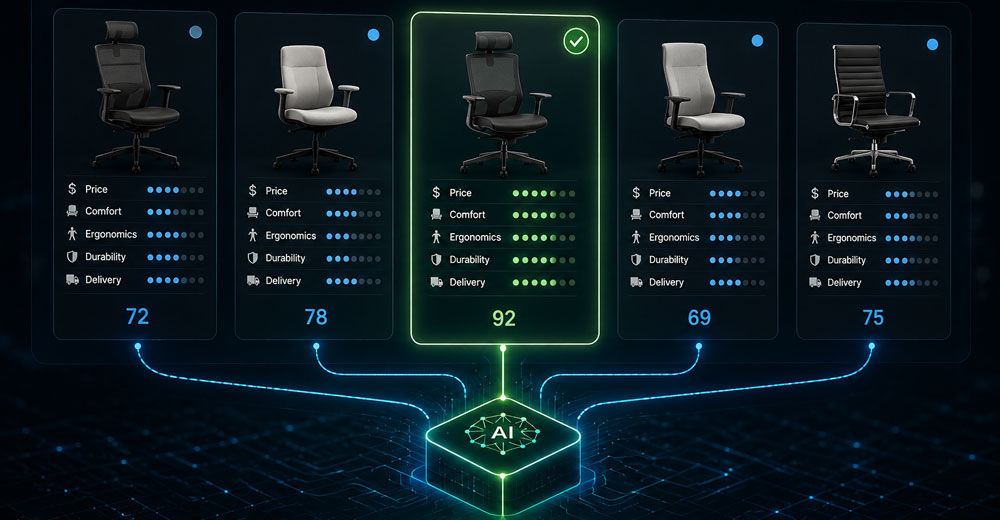
Suppose you had your own purchasing department though — in this case, a software application that took care of capturing your needs and then scoured the Internet looking for close fits. The idea isn’t new, I will admit that, but has there ever been a greater need? As the analog to CRM, we might call it “vendor relationship management” (VRM) and I think it might be good for all parties. How?
They say it takes many people upwards of six months to buy a car, and a lot of that time is spent gathering information and evaluating it. Salespeople really don’t want to deal with someone who is literally just kicking the tires, they want to deal with people who are ready to commit. So I see VRM as something that might make life easier for the customer, but at the same time, it might function in a way analogous to lead nurturing software only from a customer’s point of view.
I doubt if very many customers would pay for such a service because customers are completely used to getting just about everything for free on the Internet. However, VRM might support an advertising model very nicely.
Imagine this, a Web crawler with my name on it goes out to explore a class of cars for me, something with two seats, no roof and bad aerodynamics so that I can’t hear the cell phone ringing (joy!). The vendor of such a chariot could simply say to the crawler: “Here’s the information you want and a URL to a really cool simulated video driving experience.”
The more I think about it, the more VRM makes sense. If you think about vendor customer interactions as an arms race then you have to admit that vendors have invested heavily in their weapons while customers are still playing with slingshots. Time to recalibrate.
Denis Pombriant is the managing principal of the Beagle Research Group, a CRM market research firm and consultancy. Pombriant’s research concentrates on evolving product ideas and emerging companies in the sales, marketing and call center disciplines. His research is freely distributed through a blog and Web site. He is working on a book and can be reached at [email protected].




















 Loading ...