

Choosing the right system in the first place is key to optimizing your investment in a customer relationship management system — and that process can be strewn with potential pitfalls, asPart 1 in this two-part series points out.
While the selection process can be unnerving, implementation can be a downright nightmare — and, in some cases, what happens after a project is over can send a company straight back to square one.
Take the sad, true story of “Company X.”
Tales of Woe
Company X decided to invest in a CRM system provided by a vendor whose name is automatically associated with the industry. The choice made sense at the time; few executives past the boom years of the late 1990s were willing to take a chance recommending a system that might not deliver. It might be expensive, the thinking went, but it was a safe choice.
Two years and US$2 million dollars later, Company X realized it had chosen poorly.
“I think by the time we came into the picture, maybe eight people were willing to use it,” Jana Eggers, general manager of QuickBase, a division ofIntuit, told CRM Buyer. “The problem was, the system never matched the business processes at the company or how the employees worked.”
Eventually, Company X decided to move to QuickBase, she said.
“Company Y,” which had chosen a system from the same vendor, experienced a similar horror story, according to Infinity Info Systems, the firm that was called in after things had gone badly awry.
“It was a pilot project lasting 18 months — a time frame we just couldn’t comprehend — and millions had already been spent,” Yacov Wrocherinsky, Infinity’s founder and CEO, told CRM Buyer. “We came in to help them assess why the system wasn’t working the way they wanted it to.”
Company Y also switched to a new system “for a fraction of what they were paying to maintain the old system,” he said.
The moral of these stories: Even an application with a marquee name will not work for every company.
Fortunately, companies are becoming savvier about their CRM implementations, Wrocherinsky said. Pilot projects rarely stretch beyond a year, and firms expect to see tangible results much sooner.
Sometimes, though, they do not realize the results they had initially expected — and when that happens, their first inclination is to invest more money in the project. For some firms, this additional expenditure proves to be worthwhile. Others, though, believe it is more cost-effective to cut their losses.
From the Dramatic …
A tried-and-true knowledge base has built up over the years for companies that want to ensure their CRM projects are a success. Much of this work takes place before the system is ever selected.
The companies that tend to succeed in the end, more often than not, are those that
- map out their requirements for a system, including the processes it is expected to support;
- are realistic in what the system can actually accomplish; and
- set real-world financial goals for the projects.
However, it is also essential to plan for the second piece — what happens after the vendors, consultants and systems integrators have left the building and the company is live with its new purchase.
Of all the eventualities a company might foresee when planning for this phase of the project, ripping out a multimillion dollar CRM system and replacing it with another is the most dramatic — and, of course, the most painful.
It is still one that a company should consider.
“There is always that possibility, no matter how well thought out the selection process was, that the project will fail,” Eggers said. “If that happens, you have to be careful of how much you are going to spend trying to make it work.”
Pick that number in advance, she recommended, and stick to it.
… To the Mundane
There are other, less-dramatic eventualities for the post-implementation phase that a company should think through. In this phase, it is crucial to factor these considerations into the budget supporting the project.
One mistake too many companies make is to reserve the majority of a project’s budget for license fees and implementation. When that happens, other expenditures — such as support for new users, training and changing the use of a system to meet new corporate needs — tend to be underfunded.
“It is a given: Once you have the system in place, you have to keep nurturing it and supporting it,” Wrocherinsky said.
The most oft-repeated mistake following implementation is underinvestment in training, according to Michael Pessetti, vice president of sales and marketing forSalesPage Technologies.
“Companies will save more and realize more return in the long run if they begin investing in training up front,” he told CRM Buyer.
Companies need to be smart about training, taking it beyond the one-size-fits-all sessions that vendors typically offer with their systems. Rather, he advised, training should be tailored to the various user communities and their requirements.
Training also must be ongoing — not only so that employees maintain their skill sets, but also to make sure they are up-to-date with any changes in the system’s use.
“Companies are dynamic. There will always be new hires, new product lines and services offered, and so on,” Pessetti said. Most companies look for systems that scale with the organization’s growth but then forget the training piece associated with those changes.
Maintenance — another post-implementation expenditure — is not quite the hidden drain on a budget that training can be. However, Pessetti noted, some firms are still not aware that vendors have become more flexible with their service level agreements — at least for those customers prepared to negotiate.
“I have seen companies spend too much on SLAs merely because they didn’t think to ask for concessions,” he remarked.
It is important to be up-to-date on industry trends — such as what discounts are considered the norm, which vendors are willing to negotiate, which do not budge, and so on.
As Pessetti pointed out, “a lot of companies don’t realize exactly how much can be negotiable in these agreements.”




















 Loading ...


















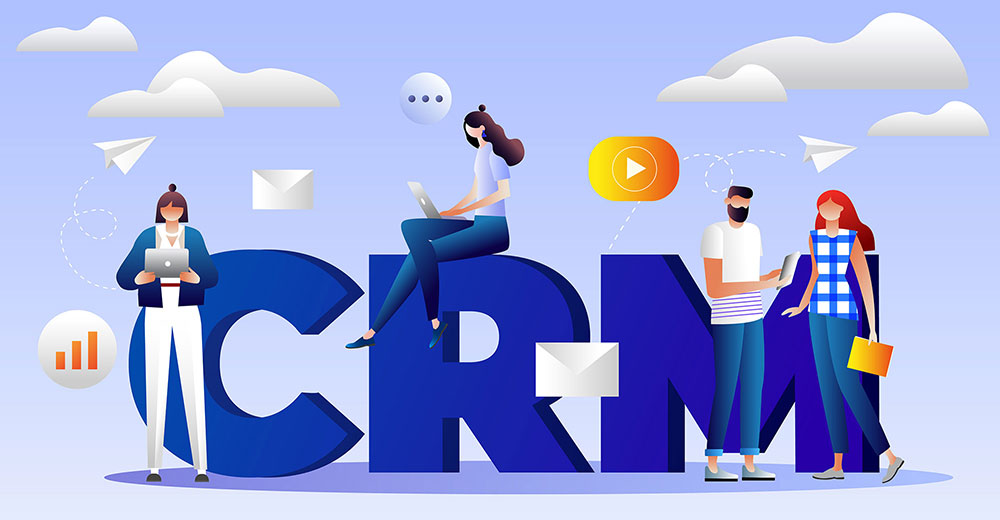











CRM’s are important to have, but finding the right one can be tedious. A CRM that evolves with current trends and has great customer service is the kind I would look out for.