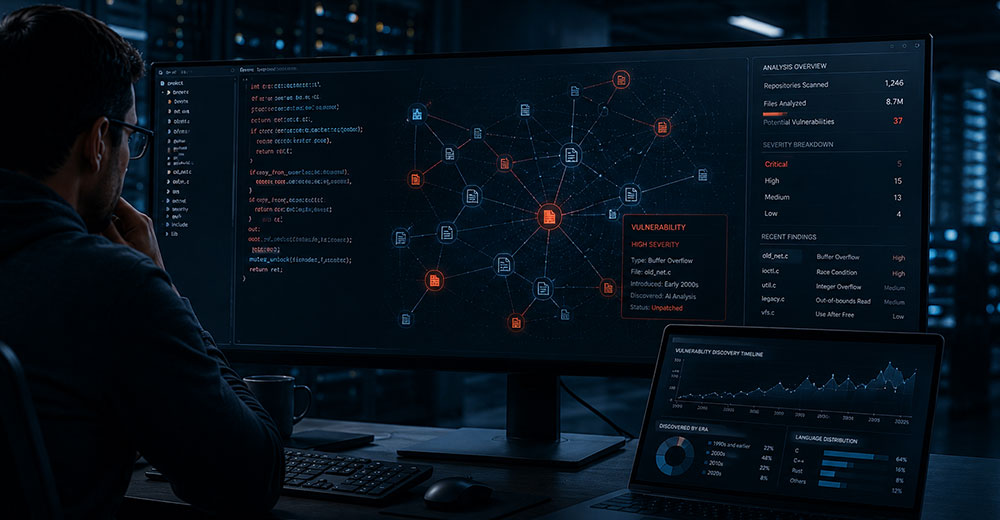

Siebel Systems launched what it calls an “end-to-end enterprise business intelligence (BI) solution.” The product recognizes a need for analytics that can compile many sources of information into a single data warehouse.
At its “User Week” in Los Angeles, Siebel announced BI applications for financials, the supply chain, the workforce and customer analytics. The new applications offer pre-built systems for business functions such as sales, procurement and human resources.
The systems are designed to integrate with data sources from other vendors as well as with other Siebel software.
New Model
In the early days of IT, vendors and customers focused on functional applications. Clients wanted to improve the operations of their call centers, so they engaged Siebel for the analytics and picked up a data mart elsewhere, often with Teradata.
But corporations have started to see possibilities beyond CRM — beyond managing their marketing, service and sales more efficiently. As they’ve sought to improve their HR function and their supply chain management processes, they’ve recognized that the best way to use the data they’ve collected is to dump it in a single database, known in industry terms as an enterprise data warehouse. This is where Teradata has made its reputation.
But what happens to the analytics when U.S. companies integrate all of their data sources? The analytic pieces need to operate on top of that Teradata warehouse. For this reason and to stay ahead of its competitors, Siebel expanded its focus this week.
Fast Forward
While Siebel’s applications for sales, service, marketing, finance, procurement, human resources and operations can be deployed independently, they also have built-in capabilities to share insight with SAP, Oracle and PeopleSoft systems, giving each partner’s piece greater business value.
However, as Siebel tries to capture the integration trend, many of the nation’s largest companies still “have too many data repositories and have trouble analyzing and acting upon customer data because it is not centrally managed,” says Chris Selland, vice president of sell-side research at Aberdeen Group. In other words, the trend has yet to draw in the most attractive and significant U.S. client corporations.
Still, the approach Siebel has taken allows for better management, analysis and response to customer information, whether it exists in an enterprise data warehouse or in several data marts, Selland told CRM Buyer.
Integration “is a huge deal for large companies. Generally the larger the company, the bigger the issue it is. Definitely this requires more than press-release partnerships. There are deep integration issues that require understanding of the particular business and customer environment,” Selland continued. “Analytics is not an out-of-the-box proposition.”
New Partnerships
In addition to Siebel’s decision to expand its analytic expertise outside of CRM into financials, HR and the supply chain, it has fortified its relationship with Teradata, so that the many Siebel customers using a Teradata enterprise data warehouse can still get the smart data manipulation they desire from Siebel’s applications.
“The partnership with Teradata will be helpful for larger companies who can better use Siebel analytics and apps with their Teradata warehouses,” Selland says.
Bob Fair, Teradata’s chief marketing officer, agreed. “Enterprise analytics are becoming a top corporate priority,” he said. He stressed the “corporate” in his statement because analytics finally have risen out of the narrow purview of IT to command company-wide attention. “A faster analytic capability is driving all of the growth in the enterprise marketplace,” he said.
As companies seek not only smarter use of their data but efficiencies in data storage, he said, they eliminate redundant data marts, saving $1 million to $2 million on each shuttered system.
“If you do it right, the benefits can be tremendous,” said Selland.
Integration and Customer Demand
“The real key is [that] customers are saying, ‘I need analytics, and I need to put all of my data in one place,'” said Fair. “So the customer sees someone like Siebel doing call center analytics and says, ‘I like it. I want it to run on my enterprise data warehouse. You two make it easier for us to work together.'”
He continued, “A couple of years ago, the partnering thing became a much higher priority with us. We partnered with systems integrators like Bearing Point as well as tool providers and Cognos and Micro Strategy on the business intelligence side, and in the last year, we really focused on the CRM side with SAP and Siebel.”
Selland added, “And it helps expand the value proposition of Siebel as a whole” — and Teradata, too — “beyond its traditional operational applications stronghold.”
It may take U.S. companies a while to catch up to this future, available today, but Fair contends the cooperation between industry vendors hasn’t come too soon. “I think enterprise analysis is the new big thing,” he said.
Selland said that the technology build-up on a new enterprise model won’t win in converting companies to this expected future. “Yes, customers still have significant unmet integration needs,” he said, “but I’d qualify that by saying technology isn’t the solution so much as integrating in line with business requirements.”









 Loading ...