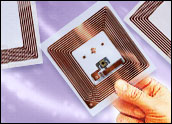
The Food and Drug Administration recently green-lighted a product called VeriChip, a coded radio chip that, when picked up by a radio-frequency reader in an ambulance or hospital emergency room, yields a code that unlocks a patient’s medical stats from a central database.
Unsurprisingly, the chips, produced and marketed by Applied Digital Solutions of Delray Beach, Florida, have stirred “Big Brother” concerns that their deployment in pets and livestock did not.
Right to Privacy
“The technical reality is that RFID is very insecure,” said Chris Hoofnagle, legislative counsel at the Electronic Privacy Information Center in Washington, D.C. “[An] official from the FDA put it best, that anyone who agrees to have a chip put in, tacitly agrees to have information read by anyone with a reader.”
As such, he told CRM Buyer, “I’m not sure many people will adopt them.”
Not only do people fear violations of their privacy and exploitation of their medical information, but many are sure to feel uncomfortable with the idea of embedding hardware into their flesh.
Additionally, the likelihood of a patient showing up for medical care with neither identification nor ability to share basic information like blood type and drug history seems to favor those consumers with limited finances for health insurance or even regular medical care.
Hoofnagle said the chip’s alleged benefits are less likely to be realized than it would be for the average person to be kidnapped, or have amnesia. “Even less likely — you’ll walk into an emergency room and they’ll have a reader,” Hoofnagle said.
Beyond Medicine
Zack Martin, editor of IDNewswire, agreed. “The problem is you need all health care facilities in the country to buy the device, and the readers aren’t cheap,” he said. “The scanners are at least [US$1000], if not two. Why are hospitals going to spend that kind of money for something no one’s using?”
“Nobody’s ready for this to be used,” Martin continued.
He predicts that even government employees would likely balk at the use of the chips for building or document access. Mexico’s attorney general and some of his key staff already wear VeriChips under their skin to gain entry to a room that houses information about the country’s drug cartels.
Martin said people aren’t even ready for biometrics technologies like iris scans and digital fingerprinting — which are much less intrusive.
“People [would] be carrying around passports with contactless chips, and they’re not crazy about that,” Martin said. “How are they going to break down the oh-so-many obstacles with this? That just baffles me. They have no business case.”
“I don’t think we’re going to see the day and age in my lifetime when we see people walking around with chips in them for things like building access — and I’m young,” he said.
Retail Tags
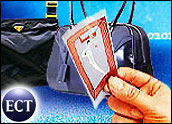
If the product does succeed in the mainstream, the VeriChip could have multiple commercial applications, but these would be likely to encounter at least as much resistance as medical applications.
John Fleming, senior strategic consultant and global practice leader of customer engagement at Gallup suggested that retailers could use the chips to overcome current sales challenges, especially selling to consumers while they shop.
“If it was possible to walk into a Target store and have some system recognize you where they could tailor special offers, special prices or show certain advertisements on a video display or have someone approach you, depending on your preferences,” it would make CRM relevant in real-time, he said.
For the ultimate in point-of-sale security he suggested that the implanted IDs could aid in credit card acceptance at the retail checkout, declining the card presented if data from ID chips in the store at the time of the purchase transaction didn’t match with the name on the card presented.
The chips could enable retailers to learn about the shoppers in their stores during certain times, for instance, and to tailor offerings to very specific audiences. According to Fleming, “They would be a great benefit to CRM.”
But such uses would be likely to encounter stiff resistance. “Things like this are a little bit scary to most people. It defies the notion of personal control and freedom,” Fleming said.





 Loading ...